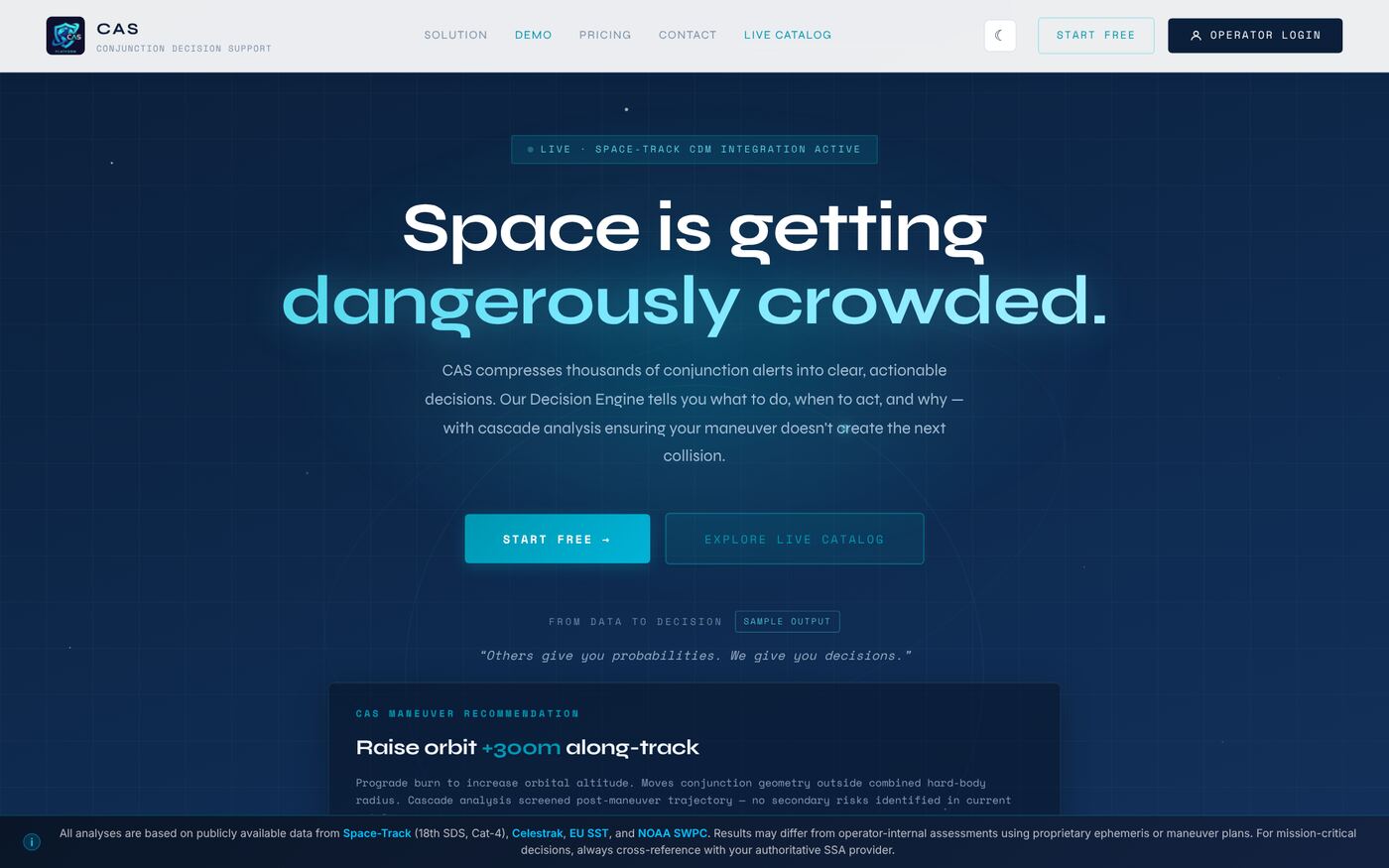
CAS (Conjunction Decision Support) compresses the thousands of close-approach alerts operators receive every day into clear decisions: what to do, when and why. It also screens the post-maneuver orbit so the maneuver does not create the next collision.
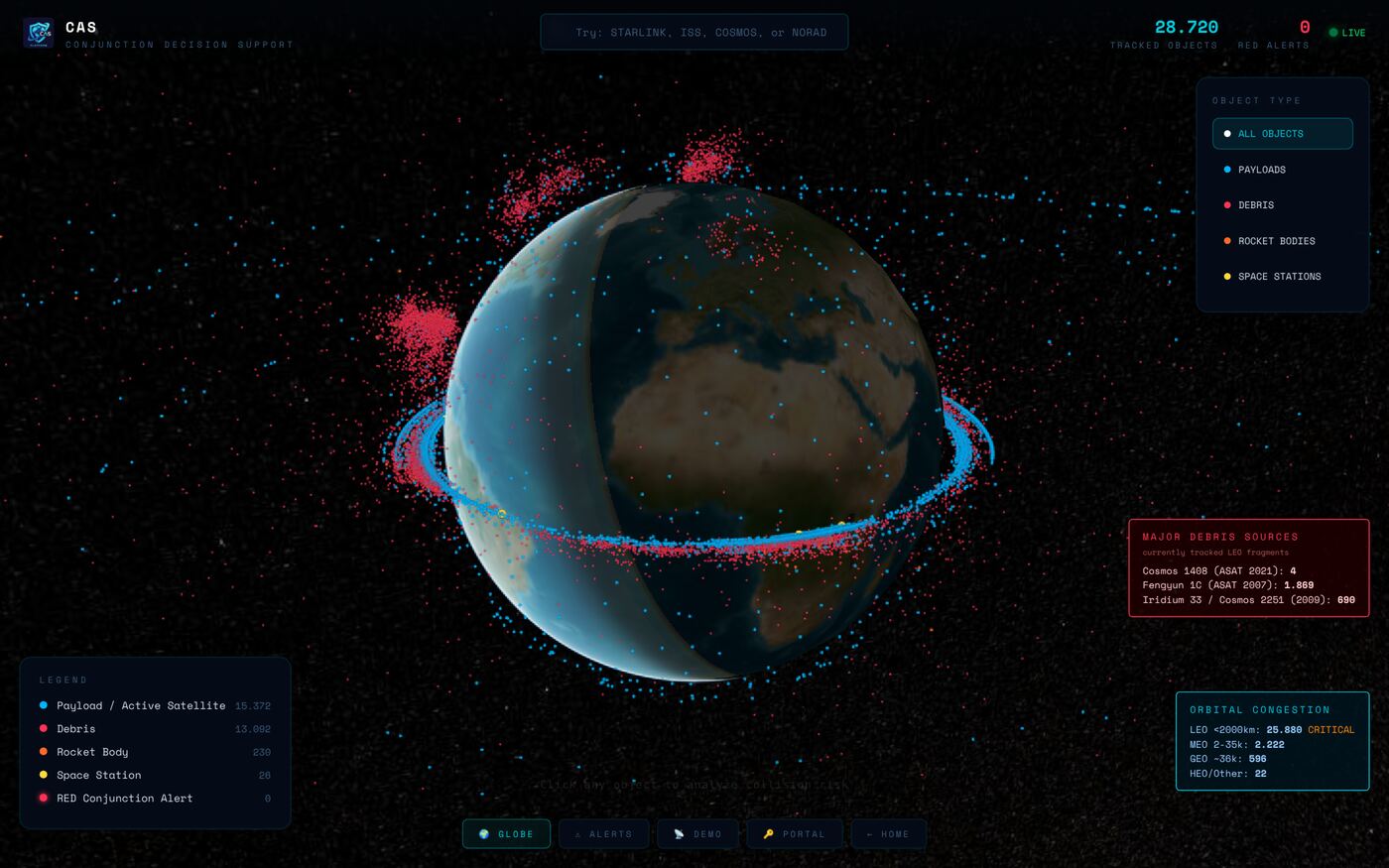
Close approaches have become about 100 times more frequent than in 2018. As density grows, so does the number of alerts an operator faces, and the cost of a wrong call.
Why Kessler syndrome matters
In 1978 Donald Kessler and Burton Cour-Palais showed that once object density in orbit passes a threshold, collisions start to feed themselves: every collision creates fragments, and fragments cause more collisions. Once that chain starts it is very hard to reverse. That is why risk has to be monitored and managed before a collision, not after.
Market size
The space situational awareness (SSA) market is expected to grow from about $1.73 billion in 2025 to $2.79 billion by 2030, roughly 10% a year. Most revenue comes from government and defense today, while the commercial operator segment is the fastest-growing part. Forecasts vary by source.
- Decision engine: actionable recommendations, not just probabilities
- Cascade analysis: checks whether a maneuver creates new risk
- Space-Track CDM integration and a live catalog
Sources:
ESA (New Space Economy), 2026 ·
KeepTrack, 2026 ·
CGTN, 2026 ·
New Space Economy, 2026 ·
MarketsandMarkets ·
UCS Satellite Database ·
Kessler & Cour-Palais, 1978